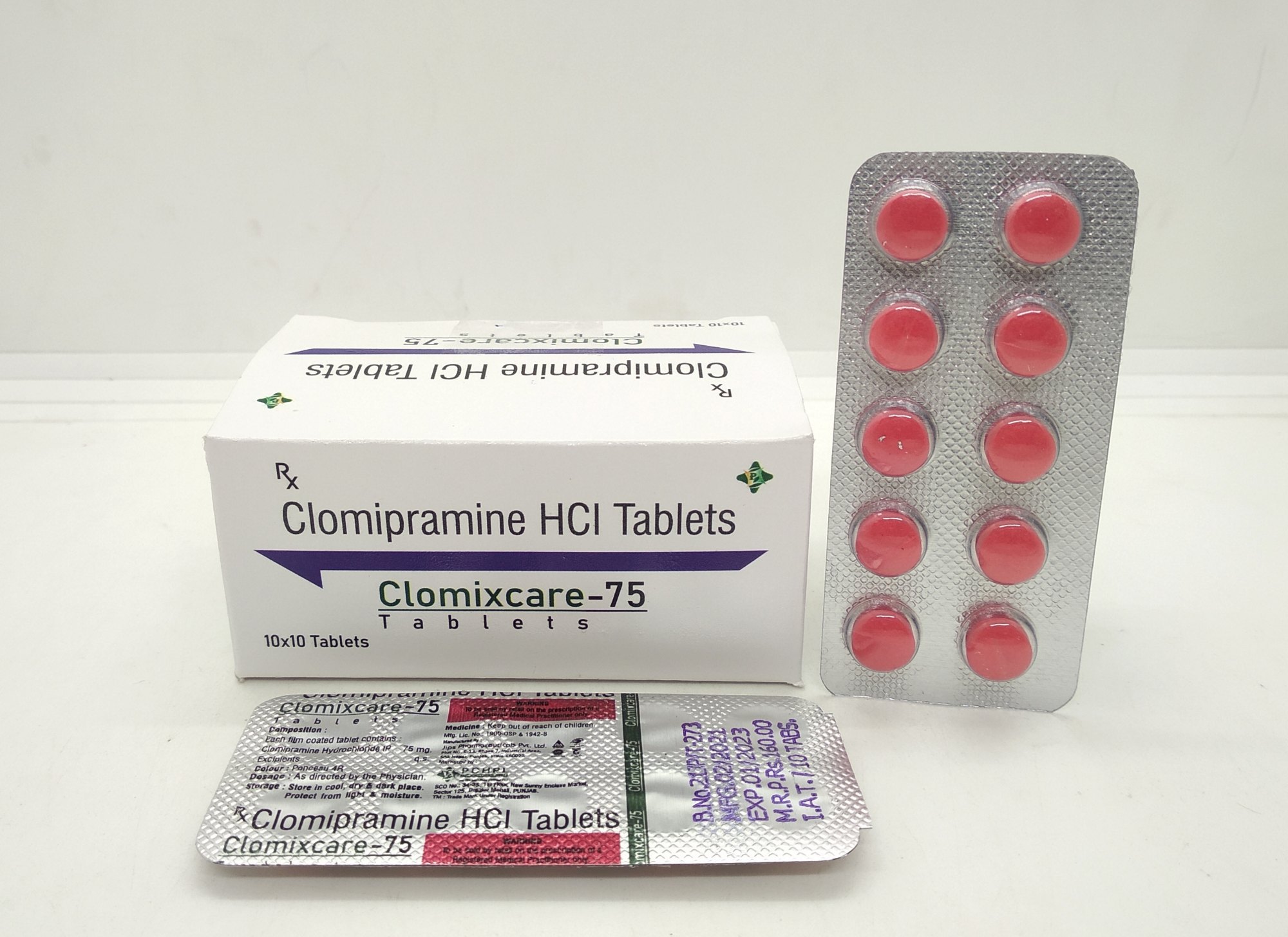
Clomipramine HCL – Clomixcare-75: Educational Guide, Uses & Safety
Clomipramine HCL – Clomixcare-75 refers to a product marketed as containing clomipramine hydrochloride, a prescription medicine belonging to the tricyclic antidepressant (TCA) class. Clomipramine is particularly associated with the treatment of obsessive-compulsive disorder (OCD) and may be prescribed for other conditions depending on the country and clinical circumstances.
The Clomixcare-75 brand, its exact formulation, manufacturer, and regulatory authorization should be verified from the original packaging and official product documentation.
What Is Clomipramine HCL – Clomixcare-75?
Clomipramine is a tricyclic antidepressant that affects chemical signaling within the central nervous system.
It primarily inhibits the reuptake of serotonin and also affects noradrenaline (norepinephrine). Increasing the availability of these neurotransmitters is believed to contribute to its therapeutic effects.
Clomipramine has particularly strong serotonin reuptake inhibition compared with many older tricyclic antidepressants.
What Is Clomipramine HCL – Clomixcare-75?
Clomixcare-75 is marketed as a clomipramine hydrochloride product. The “75” generally indicates a stated 75mg strength, although the exact formulation should always be checked on the manufacturer’s label.
The strength printed on a medication package does not mean that it is appropriate for every patient. Treatment with clomipramine requires professional assessment and monitoring.
What Is Clomipramine HCL – Clomixcare-75 Used For?
One of the best-established clinical applications of clomipramine is the treatment of obsessive-compulsive disorder (OCD).
OCD is characterized by persistent intrusive thoughts, images, or urges known as obsessions and repetitive behaviors or mental acts known as compulsions.
Depending on local authorization and individual circumstances, clomipramine may also be used for certain depressive disorders or other psychiatric conditions.
How Does Clomipramine HCL – Clomixcare-75 Work?
Clomipramine primarily blocks the reuptake of serotonin and, to a lesser extent, noradrenaline.
This increases the availability of these neurotransmitters at neuronal connections. Clomipramine also interacts with several other receptor systems, which contributes both to its therapeutic properties and its potential side effects.
Clinical improvement may develop gradually rather than immediately.
Clomipramine and OCD
Clomipramine has been extensively studied in relation to OCD.
Medication is not necessarily the only component of treatment. Cognitive behavioural therapy (CBT), particularly exposure and response prevention (ERP), is also an established psychological approach for OCD.
Treatment decisions depend on symptom severity, previous treatment response, other medical conditions, and individual circumstances.
Possible Side Effects
Clomipramine can cause side effects, including:
- Dry mouth
- Constipation
- Drowsiness
- Dizziness
- Increased sweating
- Blurred vision
- Nausea
- Changes in appetite or weight
- Sexual side effects
- Changes in heart rate
Some adverse effects can be more serious, particularly in overdose or in people with certain cardiovascular conditions.
Important Safety Considerations
Clomipramine HCL – Clomixcare-75 affects several neurotransmitter and receptor systems and can interact with numerous medications.
Combining it with other medicines that significantly increase serotonin can increase the risk of serotonin syndrome, a potentially serious reaction.
There are also important warnings concerning changes in mood and suicidal thoughts or behavior, particularly during certain stages of antidepressant treatment and in younger people. Significant mood or behavioral changes require prompt professional attention.
Clomipramine and Alcohol
Clomipramine HCL – Clomixcare-75 Alcohol can increase sedation and impairment associated with clomipramine.
People prescribed clomipramine should discuss alcohol use and other sedating medications with their healthcare professional.
Driving and other activities requiring full alertness may also be affected, particularly when treatment is started or changed.
Stopping Clomipramine
Clomipramine should generally not be discontinued suddenly after established regular treatment unless medically necessary and directed by a healthcare professional.
Abrupt discontinuation can cause withdrawal symptoms such as nausea, headache, sleep disturbance, irritability, and general discomfort.
A clinician can determine an appropriate discontinuation plan when treatment needs to end.
Frequently Asked Questions
What is Clomixcare-75?
Clomixcare-75 is marketed as a product containing clomipramine hydrochloride, generally associated with a stated 75mg strength.
What is clomipramine used for?
Clomipramine is particularly associated with treating obsessive-compulsive disorder and may have other authorized uses depending on the jurisdiction.
Is clomipramine an SSRI?
No. Clomipramine is a tricyclic antidepressant, although it has strong effects on serotonin reuptake.
Does clomipramine work immediately?
Not usually. Therapeutic effects can take time to develop, and response varies between individuals.
Can clomipramine cause withdrawal symptoms?
Yes. Abrupt discontinuation following established treatment can produce withdrawal symptoms, which is why treatment changes should normally be professionally supervised.
Conclusion
Clomipramine HCL – Clomixcare-75 is marketed as a clomipramine hydrochloride medicine. Clomipramine is a prescription tricyclic antidepressant with a particularly established role in the management of OCD.
Its effects on serotonin, noradrenaline, and several other receptor systems also mean that side effects, medication interactions, cardiovascular considerations, and discontinuation effects require appropriate medical supervision.
Educational disclaimer: This content is provided for educational and SEO purposes only. It is not medical advice, a prescription, or individualized dosing guidance.



Reviews
There are no reviews yet.